 Trusted industrial bearing supplier delivering durable and high-performance solutions across
industries.
Trusted industrial bearing supplier delivering durable and high-performance solutions across
industries.


5 Common Causes of Premature Failure in Nachi Ball Bearings and How to Fix Them
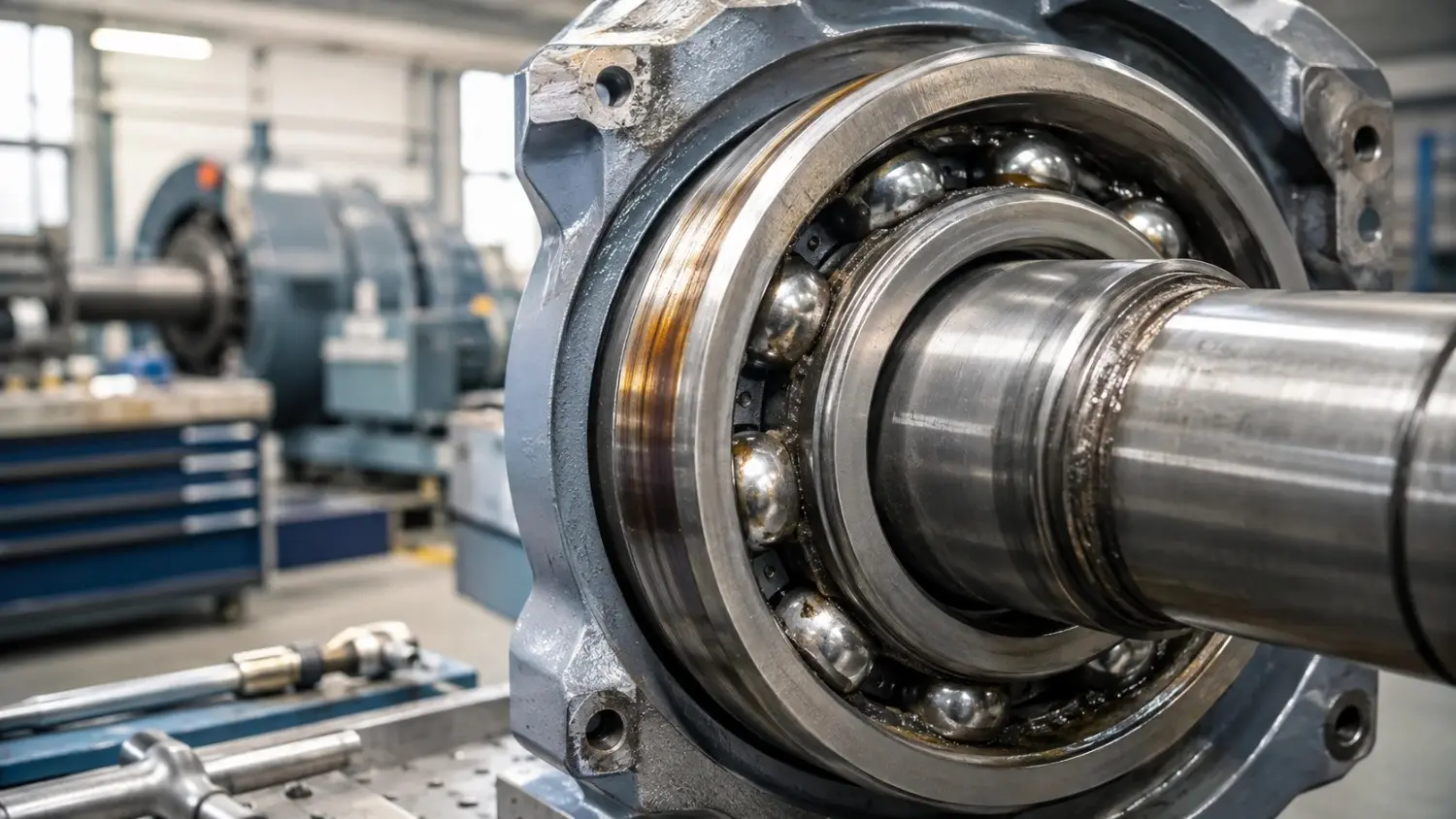
A shop-floor look at what really shortens bearing life, and what to do about it.
Walk into almost any plant and you'll find a machine that's had a bearing changed too soon. Not because the part was bad out of the box, but because daily running wore it down faster than it should have. Nachi ball bearings are built for tough duty, yet no bearing survives poor operating habits for long.
The good news: ball bearing failure almost never happens without a reason. Know the usual bearing failure causes and you can catch warning signs weeks before a breakdown. That's what we're covering: the five culprits behind most early failures, and fixes your team can actually use.
What Causes Premature Bearing Failure?
So what actually counts as "premature"? If a bearing wears out, seizes, or gets damaged well before its rated life, that's it. And here's the thing: it's rarely the bearing's fault. In most cases it comes down to how the part was lubricated, fitted, loaded, or looked after on site. Run a basic bearing failure analysis on a failed unit and the same handful of habits usually turns up. Catch those early, and a good chunk of the ball bearing problems on your floor just stop happening.
Why Identifying the Cause Matters
Chasing the actual cause, not just swapping the part, pays off in a few ways:
- Less unplanned downtime on the line
- No knock-on damage to shafts, housings, or seals
- Longer working life from your industrial ball bearings
- Fewer surprise maintenance bills
- Safer running conditions at high speed or under heavy load
5 Common Causes of Ball Bearing Failure
Here are the 5 common causes of ball bearing failure:
1. Inadequate or Incorrect Bearing Lubrication
This is the one maintenance teams hear about most. Skimp on grease and friction climbs; overdo it and heat gets trapped inside instead of escaping.
- Stick to the grease type and quantity suited to that bearing's size and speed
- Set a fixed re-greasing interval rather than doing it by feel
- Never top up with a different, incompatible grease
Getting bearing lubrication right is honestly the cheapest insurance you can buy for a rotating assembly.
2. Contamination and Dust Ingress
Grit, moisture, or stray metal shavings chew through raceways faster than almost anything else here.
- Fit seals or shields matched to the environment the bearing runs in
- Keep new bearings sealed in their packaging until the moment of fitting
- Clean the housing properly before a replacement goes in
This type of bearing wear shows up constantly in cement, steel, and agricultural settings, where dust in the air is just part of the job.
3. Overloading and Misalignment
Push a bearing past its rated load, or seat it slightly off-angle, and stress stops spreading evenly across the rolling elements.
- Size the bearing to the actual load it will carry, not just the shaft diameter
- Use alignment tools during fitting instead of eyeballing it
- Re-check alignment after any major service work
A surprising share of ball bearing problems reported on the floor trace back to nothing more than a fraction of a degree of misalignment.
4. Bearing Overheating
Once temperatures climb, grease loses consistency and internal clearances can shift out of spec.
- Fit temperature sensors where the application allows it
- Give the housing enough airflow to shed heat
- Look into any unusual warmth right away, not next week
More often than not, bearing overheating is a symptom, not the root cause, pointing back to a lubrication or load issue.
5. Improper Installation and Handling
Hammering a bearing onto a shaft or striking the outer race can leave damage you won't notice until weeks of running have passed.
- Use induction heating or a proper press, not brute force
- Never let force pass through the rolling elements themselves
- Make sure whoever fits the bearing has been trained on it
Features to Look For in Quality Nachi Ball Bearings
Here are the features to look for in a nachi ball bearings:
- Precision-ground raceways that run smoothly from day one
- Even, consistent hardness across the material
- Sealing built for the contamination levels you actually deal with
- Heat treatment that holds dimensional accuracy under load
- Quality testing on record before the batch ships
A genuine Nachi ball bearing is held to tight tolerances at the factory, so where you buy industrial ball bearings from matters almost as much as how you look after them.
|
Did You Know? Nachi actually makes its own steel. Not many bearing manufacturers do that, and it's part of why they can keep such tight control over raw material quality. |
Product Overview
IBH stocks a broad line-up of industrial ball bearings for automotive, agriculture, pumps, motors, and heavy engineering work. As one of the recognised Nachi Ball Bearings Authorized Distributors in India, stock comes from verified manufacturing channels and stays ready for quick dispatch.
Weighing up different ball bearing dealers in India? Stick with an authorised distributor: no counterfeit stock, and every batch matches the last one. That's exactly why many buyers pick one name among Ball Bearings Suppliers in India and stay put, rather than shopping around each time.
Benefits of Timely Maintenance
Here are the benefits of timely maintenance of Nachi ball bearings:
- Fewer breakdowns that stop production cold
- Lower repair bills over the long run
- Better energy efficiency once friction drops
- Longer gaps between bearing replacements
- Safer conditions for anyone working near the machinery
Routine ball bearing maintenance costs far less than an emergency shutdown ever will.
Applications and Use Cases
Industrial ball bearings turn up almost everywhere machines move, including:
- Automotive assemblies and drivetrain parts
- Agricultural machinery and processing lines
- Pumps and motors in manufacturing plants
- Sugar and paper processing operations
- Heavy engineering and construction equipment
|
Trivia: Even a small amount of shaft misalignment can shorten a bearing's working life dramatically, which is why alignment checks matter more than most people assume. |
Comparison Table: Failure Cause, Warning Sign, and Fix
Here are the comparison table showing failure, warning sign and common fixes:
| Failure Cause | Warning Sign | Recommended Fix |
|---|---|---|
| Poor lubrication | Unusual noise, rising temperature | Correct grease type and schedule |
| Contamination | Gritty rotation, discoloured grease | Better seals and clean handling |
| Overload or misalignment | Vibration, uneven wear pattern | Correct load rating and alignment |
| Overheating | Hot housing, grease breakdown | Better ventilation, load review |
| Improper installation | Early-stage noise or seizure | Correct tools and trained handling |
Expert Tips / Buying Guide
Here are the expert tips and buying guide for nachi ball bearings:
- Check the bearing's packaging and condition before it ever goes near the shaft
- Keep a written log of lubrication and inspection dates for each machine
- Swap out worn seals before contamination gets a chance to enter
- Buy from established Nachi bearings suppliers, not the cheapest listing you can find
- Run refresher training for maintenance staff every so often
|
Fact: Lubrication issues are widely regarded as one of the leading contributors to premature bearing failure across industrial settings. |
About IBH
IBH, your reliable Nachi Bearing Distributor, Dealer & Supplier in India. IBH is associated with Nachi, a renowned Japanese brand, established its presence in the country almost 8 decades before. IBH established in 1973 the company has more than 80 years experience to ease the sourcing and bearing needs. With the availability of Nachi Technology India Pvt. Ltd. (NTID), who manufactures bearing solutions from their technologically sound plant in Neemrana, Rajasthan IBH is a dependable solution provider that deals with all Nachi pillow blocks, thrust ball bearings, cylindrical roller bearings, etc., equipped with a complete catalogue and all the technical backup available in the industry.
FAQs
1. What's the number one reason bearings fail early?
Nine times out of ten? Lubrication. Run a bearing dry and metal grinds on metal, building heat fast. Pack in too much grease and that heat has nowhere to escape either. Both ways, clearances start moving and wear takes off. Set a grease schedule that actually matches the bearing's size, and half your problems disappear.
2. How do you spot a bearing that's about to go?
Your ears usually catch it first, not your eyes. A grinding sound, a squeal, vibration that wasn't there last week, or a housing you can't touch comfortably. If the grease looks off, gritty or a strange colour, that's worth noting too. Once you've flagged it, you get to schedule the fix instead of reacting to a shutdown.
3. How often should industrial ball bearings be lubricated?
Depends on the bearing, honestly. Speed, type, and how tough the surroundings are all change the answer. Manufacturer guidelines give you a starting point, but real conditions, heat, dust, load, push that interval around. Write the date down each time you grease one. That log tells you far more than guesswork ever will.
4. Can a misaligned bearing really cause that much damage?
It really doesn't take much. A fraction of a degree off, and the load stops spreading evenly, piling up on one side instead. Wear speeds up from there, and if you let it run, you're looking at vibration, noise, then failure. A five-minute alignment check after any service work saves you from all of that.
5. Are all Nachi ball bearings suitable for high-load applications?
No, not across the board. Deep groove bearings cover the everyday, general-purpose work well enough. Once loads get heavier or the setup gets more complicated, spherical or tapered roller types tend to hold up better. Speed, direction of load, and where the machine sits all play into it, so check the sheet before you order.
6. Where can I buy genuine Nachi ball bearings in India?
Stick with an authorised distributor, skip the random online sellers. IBH sources straight from verified manufacturing channels and keeps stock on hand, so there's no long wait and no guessing about whether it's real. Buying authorised also means the next batch matches this one, which matters once the bearing's already inside the machine.
Conclusion
Strip it all back and premature failure comes down to five things, more or less: bad lubrication, contamination, misalignment, overheating, or rough handling during installation. Build a routine around these bearing failure causes and you'll catch most problems before they cost you a shift. Add genuine components from a supplier you actually trust, and things just run longer with fewer headaches.
|
Need genuine, tested bearings for your operations? Talk to IBH, a trusted Nachi bearing distributor, for reliable industrial ball bearings backed by real technical support. |