 Trusted industrial bearing supplier delivering durable and high-performance solutions across
industries.
Trusted industrial bearing supplier delivering durable and high-performance solutions across
industries.


How to Choose the Right Ball Bearing Manufacturer for High-Load Industrial Machinery
Published by IBH Bearings Pvt. Ltd. | Authorised NACHI Distributors & Dealers in India
All large-size industrial machines, whether they are a steel conveyor, a cement plant crusher, a power turbine or a high-precision CNC unit, share the same thing: they all rely on bearings to perform their functions.
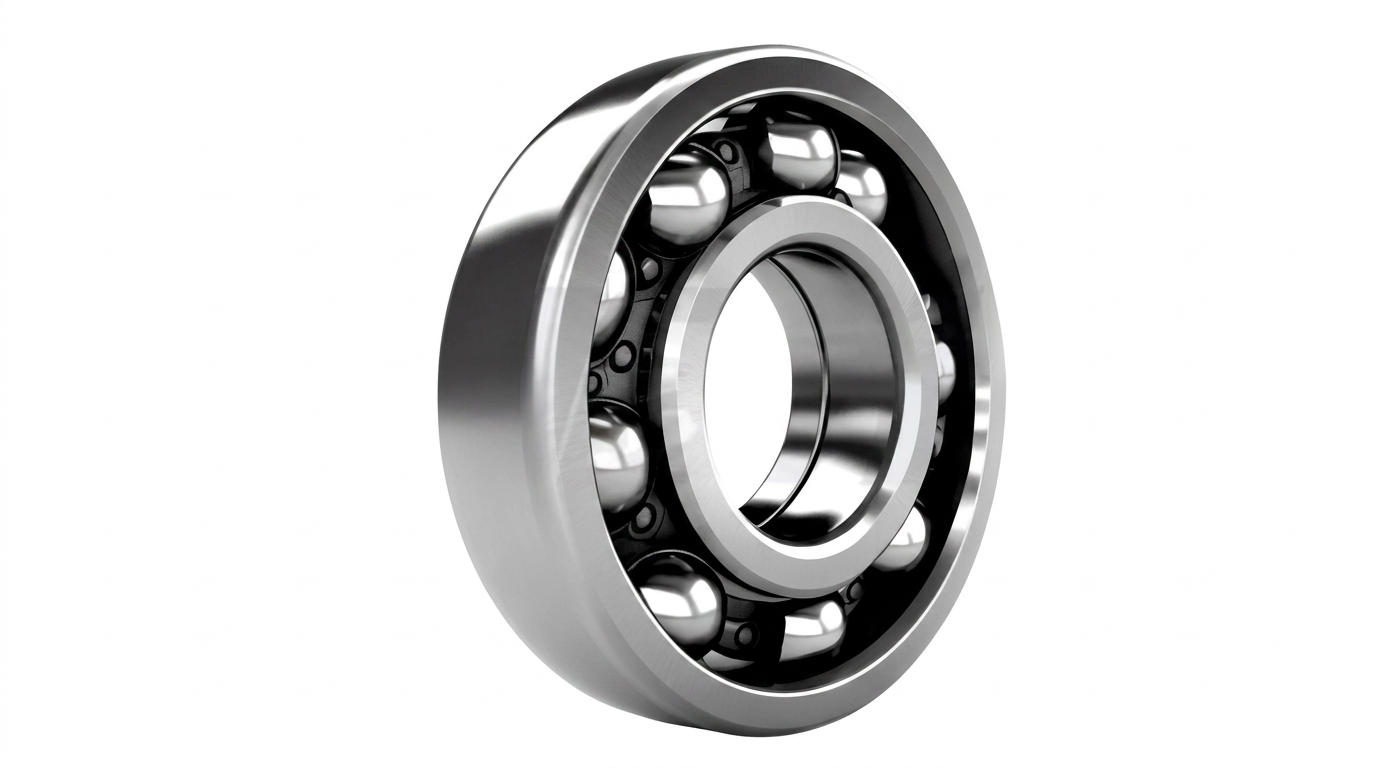
Bearings can be tiny in size yet their contribution is gigantic. They assist in rotating shafts, control the transfer of loads, minimize friction and ensure smooth running of equipment throughout thousands of active hours. With the bearing on the right, the machine runs. When not, it all halts.
The selection of the appropriate bearing or the appropriate supplier is one of the most far-reaching industrial operations for procurement managers, maintenance engineers and plant operators. This guide will guide you through the process of making that decision with confidence.
Understanding the Role of Ball Bearings in Industrial Machinery
It is necessary to know what bearings are actually performing in your equipment before you judge manufacturers or suppliers.
Ball bearings are used to:
- Minimise rotational friction among moving parts like shafts and housings.
- Support radial loads (perpendicular to the shaft) and axial loads (along the shaft)
- Facilitate easy, steady rotation at different speeds and temperatures.
- Shield neighbouring components – motors, gearboxes, spindles, etc. – against early wear.
Bearings in high-load applications are subjected to constant mechanical loads. The part that is light or medium duty will wear out quickly in the harsh industrial conditions resulting in vibrations, overheating and failure. You have to choose the proper type and grade of bearing to use under your particular load conditions, not incidental.
Bearing Types — Precision Starts with the Right Selection
| Bearing Type | Designed For |
|---|---|
| Deep Groove Ball Bearing | High-speed rotation, moderate radial and axial loads |
| Thrust Ball Bearing | Axial (end-direction) loads, lower-speed applications |
| Angular Contact Bearing | Combined loads at elevated speeds |
| Cylindrical Roller Bearing | Heavy radial loads and shock-prone environments |
Industrial Trivia
The oldest surviving patented design of ball bearing dates back to 1794, when Welsh ironmaster Philip Vaughan invented it to use as axles on a carriage. Bearing technology has improved since then to make precision tolerances of microns. The current bearing industry worldwide yields about 50 billion units per year and one industrial wind turbine is based on bearings that will last more than 20 years without needing replacement.
What to Look for in a Ball Bearing Supplier!
The quality of your bearing only depends on the supplier of it. The ability to assess suppliers of ball bearers to your plant should extend beyond the price and delivery lead time.
The following are key criteria to consider:
- Certification and traceability — Does the supplier supply products of ISO-compliant, manufacturer-certified products with documented origin?
- Technical competence – Are they providing application-specific guidance, or transactional supply only?
- Stock depth — Do they have stock in regular and speciality lines, such as thrust ball-bearing wholesaler-type stock?
- Reliability of Response – What is their response time for critical replacements and bulk orders?
- After-sales responsibility – Does it have a system of dealing with quality problems or emergency replacement?
A supplier who simply supplies you with products but is not familiar with the application or offers responsive support poses a risk to your maintenance chain. The correct partner will be an effective technical resource rather than a supplier.
Why the Manufacturer's Precision Standards Define Your Outcome
Not every bearing that appears the same behaves in the same way. Dimensional tolerances, steel grade, heat treatment procedures and quality control measures differ considerably between manufacturers – and the variations dictate the service life of a bearing in the presence of industrial load.
In choosing a manufacturer, consider:
- ABEC or ISO tolerance class ratings are suitable in your application.
- Recorded fatigue life ratings (C and C0 values)
- Stability of quality in production batches.
- Proven performance data in applications similar to yours
- Internationally known and certified in the industry.
A manufacturing company that has a solid engineering history, regulated manufacturing processes and stringent testing regulations provides a much longer service life – particularly when it comes to continuous-cycle, high-temperature or high-vibration applications.
Case Study: Bearing Life Extension in a Packaging Plant.
Sector: FMCG Packaging | Region: Mumbai, Maharashtra.
One of the packaging plants in Mumbai was experiencing a lot of conveyor motor failures which were leading to significant downtime and maintenance expenses. Upon inspection of the application, IBH suggested replacing it with NACHI 6200-series deep groove ball bearings having increased load capacity. The outcome was a tremendous growth in bearing life, a 70% decrease in unplanned downtime, and quicker procurement support with the help of IBH.
Recognising the Warning Signs of an Unreliable Supplier
Not all ball bearings suppliers in a competitive market can produce their products at an appealing price but at the same time produce genuine products of grade quality. In the case of high-load industrial uses, the implications of having an unqualified supplier may be dire.
Pay attention to the following signs:
- No physical inventory or warehouse — products are sourced reactively, increasing lead times during critical situations
- Inability to provide manufacturer documentation or product traceability
- Pricing significantly below market — often a signal of counterfeit, rejected or off-grade stock
- No technical support or application guidance offered
- Absence of a clear process for quality disputes or returns
The price of a bearing failure in terms of downtime, emergency labour and production loss in the maintenance of industry is nearly always many times greater than the price of the bearing itself. Quality procurement is not an overhead; it is an operation risk management.
Thrust Ball Bearings — A Frequently Overlooked Critical Component
Though deep groove ball bearings have been the focus of most of the discussion on the procurement of ball bearings, thrust ball bearings are equally valuable in their appropriate use and are frequently underspecified.
Thrust ball bearings are tailored to the end-direction (axial) loads. They are usually used in vertical shaft systems, screw drives, machine tool spindles, crane slewing mechanisms, and hydraulic components.
Being one of the limited number of thrust ball-bearing wholesalers in India, offering complete lines of NACHI products, IBH periodically supports maintenance crews who have only discovered the causes of axial load performance problems after an equipment failure has occurred.
The main considerations in thrust bearing:
- Calculate both static axial load capacity and dynamic load rating — not dynamic rating alone
- Confirm operating speed compatibility — thrust ball bearings are not suited for high-RPM conditions
- Ensure alignment precision during installation — even minor misalignment significantly reduces service life
Building a Proactive Bearing Procurement Strategy
Operationally and financially inefficient is reactive procurement, i.e., buying bearings when they have failed. Formulated procurement plan has the benefit of minimising unexpected downtime, decreasing overall cost of ownership, and easing maintenance planning.
Suggested plan of a high-load industrial plant:
Step 1 – Asset criticality mapping
Name all machines where bearing failure causes the production to stop or endangerment. These are your priority assets.
Step 2 – Brand standardisation
Unifying to one manufacturer that you can rely on throughout your facility eases inventory, makes sourcing more complex, and enhances technical uniformity.
Step 3 – Safety stock management
Have an established amount of your riskiest bearing references on the premises at all times – two or three units per critical use.
Step 4 – Condition monitoring
Vibration sensors and temperature sensors can detect bearing degradation at an early stage (weeks before failure), providing the opportunity to replace the bearing in advance instead of repairing it in an emergency.
Step 5 – Supplier consolidation
The advantage of having one qualified supplier to meet your core bearing needs saves on pricing, responsibility and responsiveness, especially when there is an emergency.
Did You Know?
Studies published in various studies of industrial maintenance reveal that bearing-related failures do comprise up to 34% of all electric motor failures in industries; hence, they are the most common cause of motor failure. Most of these failures can be avoided by proper selection of bearings, proper installation habits and scheduled replacement.
Why IBH and NACHI Represent a Dependable Partnership
Being licensed NACHI Ball Bearings Dealers in India and Internationally, IBH presents its customers with a blend of high-quality products that are certified by the manufacturers and expert application support.
NACHI Corporation is a Japanese precision engineering company that has a history of more than 80 years of bearing manufacturing experience. The availability of their products to the Indian market is guaranteed by the presence of Nachi Technology India Pvt. Ltd. (NTID) where the company manufactures genuine products and responds to the needs of the Indian market.
IBH offers you as its NACHI bearing partner:
- Genuine, fully traceable NACHI inventory across standard and specialty ranges
- Technical guidance on bearing selection based on load, speed, temperature, and environmental conditions
- Wholesale supply capability for large projects and ongoing procurement programmes
- Fast-turnaround availability for both planned orders and urgent replacements
- Support for industries including steel, cement, automotive, power generation, packaging, and automation
About IBH Bearings Pvt. Ltd.
IBH Bearings Pvt. Ltd. is a reputed supplier of industrial bearings and an authorised distributor, dealer and supplier of NACHI in India that has developed a solid fifty years of experience since its establishment in 1973. Headquartered in 504, DLF Towers, Shivaji Marg, Delhi - 110015, IBH has served industries such as automotive, steel, cement, power and precision manufacturing.
Being an approved NACHI partner, IBH provides bearings designed to perform in both radial, thrust, and combination load cases. The strength of the company is that it has merged both the real product availability and the practical application knowledge of the company in assisting the clients in choosing the appropriate bearing, minimising downtime, and maximising the machine performance in the long run.
FAQs
1. How do I choose the right ball bearing for industrial machinery?
Select a bearing based on load type, operating speed, temperature, alignment requirements, and environmental conditions. Choosing the correct bearing improves equipment reliability and extends service life.
2. What causes ball bearing failure in industrial equipment?
Common causes include improper lubrication, contamination, overloading, misalignment, incorrect installation, and excessive heat. Regular maintenance and proper bearing selection help prevent premature failures.
3. Which type of bearing is best for heavy-load applications?
Cylindrical roller bearings are typically preferred for heavy radial loads, while angular contact and thrust ball bearings are suitable for combined or axial load applications.
4. How long do industrial ball bearings last?
Bearing lifespan depends on load, speed, operating conditions, lubrication and installation quality. High-quality bearings can operate reliably for several years when properly maintained.
5. Why should I buy bearings from an authorised distributor?
Authorised distributors provide genuine, traceable products, technical support, manufacturer warranties and reliable inventory availability, reducing the risk of counterfeit or low-quality bearings.
6. What is the difference between deep groove and thrust ball bearings?
Deep groove ball bearings handle both radial and moderate axial loads at high speeds, while thrust ball bearings are specifically designed to support axial loads in one direction.
Conclusion
Choosing the appropriate ball bearing manufacturer and supplier of high-load industrial machinery is a choice that directly affects how dependable your operations are, how expensive it is to maintain and the overall cost of ownership.
The first step is to know what your application actually needs – what bearing type is appropriate, what load rating you need and what grade you need to operate in. It goes on to select a supplier that does not only provide availability of products but also technical expertise, product quality, and reliable service.
In an industrial environment where machines operate 24/7, and failure has a tangible economic impact, there is no alternative to bearings that are manufactured with precision by established manufacturers and distributed by accredited partners with the expertise to support them.
IBH, being a licensed NACHI dealer and distributor in India, could help meet that need at all levels – at the selection level, at the supply level and at the long-term supply level.
Contact IBH about Your Bearing Need
It could be technical advice on the choice of bearings, bulk buying of wholesale prices on NACHI products, or the urgent necessity to replace something urgently – the IBH team is at the ready.
Get in touch with us today to enquire about your application needs or quote.