 Trusted industrial bearing supplier delivering durable and high-performance solutions across
industries.
Trusted industrial bearing supplier delivering durable and high-performance solutions across
industries.


How to Evaluate Bearing Quality Before Purchase
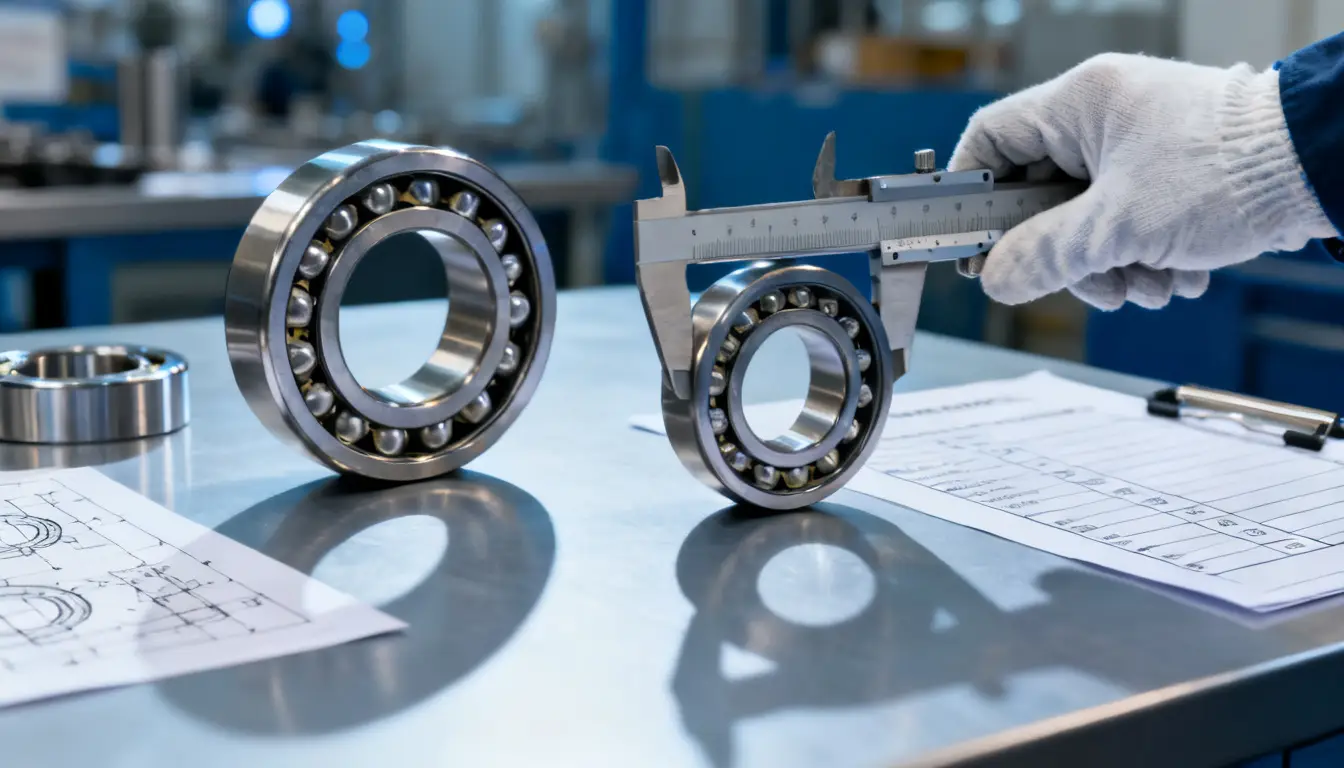
Cheap bearing quality can lead to early breakdowns, creating costly machine downtime. Few people think to compare bearing quality, but it is often true that if you price a bearing on only cost, there is a much better value to be had if the correct product is used. And whatever your industry be it manufacturing, car maintenance, agricultural machinery, or supplies, there's still value to be harnessed.
You have many options from lots of bearing company brands, each bearing manufacturer, and many bearing suppliers. It’s really hard to know which one is worth buying. Some bearings might look the same on the outside, but it might have very different performance. This price guide will show you what to check before you purchase. At the end of this guide, you will know how to identify good quality products, compare bearing price with value, and pick the perfect bearing.
What is Bearing and its Types?
Bearings are some of the most critical parts used in mechanical systems and machinery. They are mainly responsible for supporting moving parts of a machine and decreasing the amount of rubbing and adhesion that occurs between two surfaces. The reduction of this impeding effect makes automotive and other machinery operate both more efficiently and longer.
A bearing is made to support loads and allow controlled motion, normally rotary. Without a bearing, too much of the energy used to run a machine would be wasted through the increased friction. This would result in an increase in heat and a decrease in the lifetime of the machine.
There are several types of bearings
Ball bearing- The ball bearing type is the most popular. They use small steel balls to reduce friction and are capable of supporting light axial loads. They are used in fans and bicycles.
Roller Bearings - Line contact tolerable to big axial loads, for radial loads, the burrs transversely, common to the industrial works and conveyer system. They are using cylindrical rollers.
Needle Bearings- They are similar to roller bearings in sizes, but they have longer and thinner rollers. applications where space is limited are when it is used in an automotive gearbox.
Thrust Bearings- They are used for carrying axial loads. Thrust Bearings are generally used for automobile steering systems and machine tools.
The tapered roller bearings- They are capable of carrying both types of load at the same time. Because of their strength, they are often used in car wheel hubs and in the construction of heavy machinery.
Plain Bearings and sliding bearings are without rolling parts, and work on a lubricated surface; they are often used at relatively low speeds.
Why Bearing Quality Matters
Small this may seem, but thousands of bearings are responsible for some of the most important jobs in a machine. Friction reduction, weight support and equipment motion are just a few of their functions.
When a low-quality bearing fails, the damage can be much more than just to the bearing. It can cause machines to overheat, generate excessive amounts of vibration and result in sudden and often expensive downtime.
Most experts agree that bearing quality directly affects:
- Equipment lifespan
- Maintenance costs
- Energy efficiency
- Workplace safety
- Machine performance
For instance, when a Conveyor system is operating 24/7 in a manufacturing plant, it relies heavily on dependable bearings, where malfunctions can halt the whole line and incur expensive production delays.
Apart from the wrong product specification being selected, manufacturers' products also lack quality control can cause premature bearing failures, evidence shows.
Therefore, it is always good to ensure quality before you buy, rather than face the repairs afterward. Sound buying decisions avoid firms from unexpected failures and maintain continuous machinery operation.
Did you know that Leonardo da Vinci invented bearing: Around 1500, Da Vinci sketched the first modern ball bearing and the "cage" used to separate the balls.
How to Check Bearing Type and Application Fit
Choosing a bearing is very important to equipment working properly and service life. First, determine the type of bearing by checking the part no, size and physical structure. Most bearings are categorized as deep groove ball bearings or roller bearings, angular contact bearings, or thrust bearings. Each type would be used under different loads, speeds, and environments.
After selecting the type of bearing then check if that type will work for the application. Take into account application-specific factors such as load capacity, speed, temperature, vibration and available space. For instance, deep groove ball bearings suit electric motors as they are capable of high speeds along with very low friction; on the other hand roller bearings are better suited to heavy load applications. Also, ensure that the bearing will be of a suitable fit on the shaft and within the housing. Correct fitment of the bearing will result in less wear and tear along with fewer discontinuous failures and greater equipment efficiency.
Interesting Fact:
Bearings stop earthquake damage: Massive "base isolation" bearings are placed under skyscrapers to absorb ground shaking and keep buildings standing.
Signs of a High-Quality Bearing
A quality bearing will be obvious even before fitment. With a bit of knowledge, you can help to steer yourself clear of inferior products.
Material Quality
Highest standard bearings are normally manufactured in a high-quality steel which is correctly heat treated which provides enhanced strength and wear-resistant properties.
Surface Finish
Look at the surface. Good bearings have smooth shiny surfaces and are free of scratches, knocks, or rough patches.
Precision Manufacturing
Good quality bearings are manufactured to high tolerances. Try and determine whether the rolling elements are operating with even, smooth movement.
Clear Markings
Native bearings are presented with straightforward product identifiers (model number, producer history, date location etc).
Protective Packaging
Respected Bearings Manufacturers show excellent robust packaging to avoid contamination/damage during transportation.
For instance, if a bearing arrived in damaged packaging, without labels or with rust present, this might suggest rough handling or questionable quality.
Most people will tell you that taking an extra couple of minutes and examining those things closely will save you some pretty expensive shopping mistakes in the future.
Quick Bearing Quality Evaluation Checklist
Inspected for smooth, quiet rotation, proper lubrication, correct dimensions, and good quality materials. Surface breakouts, corrosion, excess play, or signs of wear should also be identified.
| Evaluation Factor | What to Check | Why It Matters |
|---|---|---|
| Material Quality | High-quality materials and appropriate treatment | Improves durability |
| Surface Finish | Smooth and defect-free surface | Reduces wear and friction |
| Manufacturing Precision | Perfect center, correct dimensions, and smooth rotation | Enhances reliability |
| Certification | Quality standards and documentation | Confirms authenticity |
| Warranty Support | Clear warranty and service conditions | Protects your investment |
Comparing Bearing Price vs. Long-Term Value
Although a low bearing price may look appealing, the price should not be the only deciding factor.
The least expensive choice could save you money at the present time, but it could be more costly in the future to maintain. Conversely, the most costly bearing is not necessarily the most appropriate.
When comparing products, consider:
- Material quality
- Warranty coverage
- Brand reputation
- Expected service life
- Technical support availability
Consider two bearings that are very similar and go into the same machine. One may be 20% more expensive. However, because the life expectancy is twice as high the more expensive option would be more economical.
You may also wish to determine the complete ownership cost rather than just the purchase price. How much money will it cost to install, maintain, become useless, and replace?
The “best” bearings are often those that last and perform well and are inexpensive. Wise purchasers don‘t look for short-term savings, but value for the longer term by considering the total cost of ownership.
Choosing Reliable Bearing Companies and Suppliers
Different brands of bearing companies do not follow the standards of the manufacturer. It is the reason that choosing a supplier is as important as choosing the materials.
Reliable bearings suppliers typically offer:
- Product certifications
- Technical support
- Product traceability
- Warranty protection
- Genuine manufacturer products
Before purchase, look into the company's history and customer reviews. Find distributors that have lots of industrial experience and positive feedback from customers.
Stop searching for ‘Bearings Near Me’! Don‘t just decide on the closest supplier: it‘s handy, but quality assurance is more important.
Good quality bearing manufacturers will provide full product specifications and test results. This can be extremely useful for customers as it can assist them to finalise their buying decision.
A supplier who can readily answer technical questions and provide documentation can come across as being more professional than one whose primary goal is to make a sale.
Mistakes to Avoid Before Buying Bearings Online
Shopping for bearings online is the most convenient and with the variety of options available very exciting. However, it can also be a risky business if you are not vigilant.
Another mistake would be buying only because the prices are significantly more attractive. However, extremely low prices can be a great excuse to distrust a product or to consider it as a lower-quality product.
Remember also not to neglect technical data! Always verify dimensions, load capacity and compatibility before ordering.
Avoid these common errors:
- Skipping product reviews
- Ignoring warranty details
- Buying from unknown sellers
- Overlooking shipping damage policies
- Do not check manufacturer info
A maintenance manager might buy bearings via the internet that seem to be the same as the ones that they are replacing. However, the machine will be running with too much vibration if the specifications are not checked thoroughly.
A lot of people will check seller information and product details to help minimize the risk of getting the wrong items.
A few additional minutes of research can save costly challenges after delivery.
ABOUT IBH
IBH India, your reliable Nachi Bearing Distributor, Dealer & Supplier in India. IBH is associated with Nachi, a renowned Japanese brand, established its presence in the country almost 8 decades before. IBH established in 1973 the company has more than 80 years experience to ease the sourcing and bearing needs. With the availability of Nachi Technology India Pvt. Ltd. (NTID), who manufactures bearing solutions from their technologically sound plant in Neemrana, Rajasthan IBH is a dependable solution provider that deals with all Nachi pillow blocks, thrust ball bearings, cylindrical roller bearings, etc., equipped with a complete catalogue and all the technical backup available in the industry.
FAQs:
1. How to know the bearing quality?
A quality bearing will have smooth surfaces, well-defined inscriptions and packaging, precise motion, and be provided with technical data and quality certificates by a trustworthy manufacturer. Confirm this information before buying a product aimed for general use.
2. Does a higher bearing price mean a better quality?
Not always. Many of the more expensive products will be made well and durably but a higher price does not necessarily reflect greater longevity. However, the higher price may be justified by comparing materials, manufacturing standards, warranty etc.
3. Then why is the importance of selecting the correct bearing type so significant?
The correct type of bearing is not only essential for correct operation, but also for operating within the design limits of a specific load, speed and operating conditions. Bearings manufactured to a high standard can prematurely fail if used in the wrong application.
4. How would you purchase bearings online and what are you searching for?
Check for specifications, manufacturer, warranty and reviews from other purchasers. A reputable online bearing retailer will normally have customer support and documentation available, reassuring the customer that they are purchasing the correct items.
5. How do reliable bearing companies reduce purchasing risks?
Authorised bearings suppliers can offer genuine products, product support, technical advice, traceability and warranty. Their expertise can help you choose the right bearing for your application and can also help eliminate the risk of counterfeits and incorrect products.
Conclusion
Selecting the appropriate bearing is not just a matter of sourcing the lowest price and settling for what is familiar. Bearing quality is determined by a myriad of factors, such as material specification, manufacturing accuracy, application compatibility and supplier dependability.
A detailed evaluation reduces downtime, enhances equipment life and minimises the future maintenance costs. Knowledge of bearing type requirements, inspection of product quality and trusted bearings manufacturers and suppliers will allow for a wise purchase.
Before ordering again, do some evaluation: check specifications, evaluate the value of each item not just the cost, and check on each company to be sure they are reputable. A little research can save a huge headache with equipment tomorrow. The best bearing purchase is the one that performs well for years to come.
| Let's figure it out together. Call IBH Today for quality products! |