 Trusted industrial bearing supplier delivering durable and high-performance solutions across
industries.
Trusted industrial bearing supplier delivering durable and high-performance solutions across
industries.


Plummer Block Housing Maintenance Guide: How to Extend Bearing Life and Prevent Failures
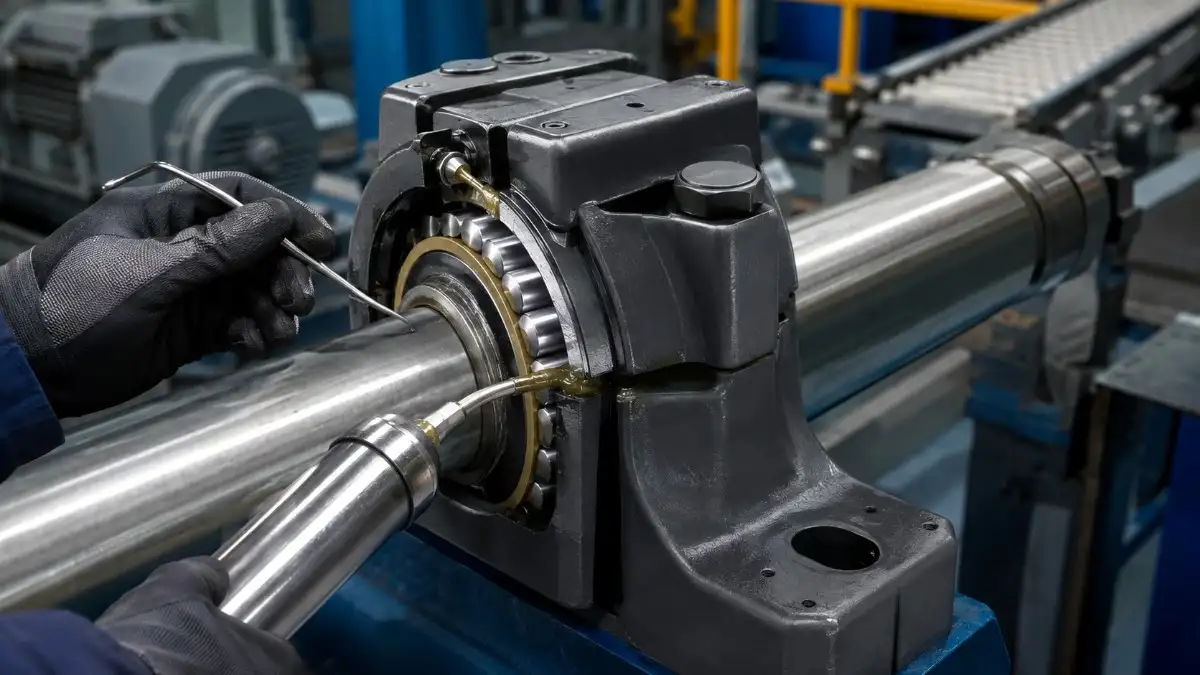
A field-ready guide to spotting bearing wear early, cutting downtime, and keeping rotating machinery running smoother, longer.
Every pump, conveyor, fan, gearbox, they all lean on one small part to keep turning: the Plummer Block Bearing. Nobody thinks about it. Until it seizes up mid-shift and the whole line stops. One overheated housing, one worn shaft, and suddenly you're looking at hours of downtime and a repair bill that's bigger than it should've been. Here's the thing though, most bearing failures don't happen overnight. They creep in. Bad lubrication. A tiny misalignment nobody noticed. Dust that got in through a worn seal. Sound familiar? This guide covers what actually works on the shop floor, real ways to stretch bearing life, catch Bearing Failure Symptoms before they turn into a shutdown, and keep your Plummer Block Housing doing its job without the drama. No theory here, just practical steps a maintenance team can put to use this week.
What Is Plummer Block Housing?
Simple enough, really. A Plummer Block Housing is a split casing, mounted separately, that holds a bearing away from the machine's main body. Not pressed into a bore like some setups. Split design. That changes a lot. It lets you:
- Mount the bearing on its own base, handy for long shafts and horizontal drive runs
- Pull the bearing out and replace it without tearing apart the entire shaft
- Handle thermal expansion and small shaft misalignment without drama
- Service it right where it sits, no need to shut the whole line for hours
But here's the catch. Sitting out there in the open means dust, moisture, vibration, all day, every day. Which is exactly why Bearing Maintenance on these units can't be an afterthought. Treat it as one, and you'll be paying for it soon enough.
Why Bearing Maintenance Matters
Skip maintenance and you're not saving time. You're just borrowing trouble, and it always shows up at the worst moment. Regular checks do a few things well:
- Catch Bearing Wear early, before it becomes a full seizure
- Stop damage from spreading to shafts, seals, couplings
- Keep the schedule predictable instead of chaos-driven
- Get more working life out of a part that isn't cheap to replace
And Bearing Reliability? It's not luck. It comes down to sticking to a lubrication schedule, keeping alignment tight, checking things on a regular basis. Nothing fancy about it. Just consistency, applied the same way every single week, not just when someone remembers.
Types and Variants of Plummer Block Housings
One size doesn't fit all here. A few common types worth knowing:
- Cast iron pillow blocks, the standard-duty workhorse, used almost everywhere
- Split spherical roller bearing housings, self-aligning, good for heavier radial loads
- Steel or fabricated housings, built for shock loads and rough handling
- Sealed or labyrinth-sealed housings, made for wet, dusty, outdoor jobs
- Adapter sleeve mounted housings, quick to fit on plain shafts without a shoulder
Pick the wrong type and you're setting yourself up for headaches later. So match the housing to the load, the speed, and the environment before anything else, not after the first failure teaches you the hard way.
Common Bearing Failure Causes
What actually causes most Bearing Failure Causes on the ground? A short list, but it repeats constantly:
- Bad or contaminated lubrication
- Shaft-to-housing misalignment
- Loads beyond what the bearing's rated for
- Water or moisture getting past worn seals
- Electrical fluting from stray currents
- Rough handling or poor storage before the bearing's even installed
Catch these early with basic Bearing Failure Analysis, vibration checks, temperature readings, a quick look at the grease, and you'll stop small problems from becoming big ones.
Bearing Failure Symptoms to Watch For
Here are some of the symptoms:
- Grinding, clicking, a knocking rhythm that wasn't there before
- Housing running hotter than usual, even under normal load
- Grease that's gone dark or has metal bits in it
- Vibration readings creeping up during routine checks
- Shaft feeling loose near the coupling
None of this is subtle once you know what to look for. Spot it on a walk-around, fix it cheap. Miss it, and you're looking at an emergency shutdown instead.
| FACT: Run a bearing just fifteen degrees Celsius hotter than normal, and it can lose about half its expected service life. |
Product Overview
Need housings you can actually count on? Sourcing from established Nachi Plummer Block Housing Suppliers in India takes a lot of the guesswork out. These come in standard dimensional series, so swapping one out or matching it across production lines doesn't turn into a scavenger hunt. Cast housing for a conveyor drive, sealed unit for an outdoor pump station, doesn't matter. Working with recognized Nachi Plummer Block Housing Distributors means the quality stays consistent and spares are actually on hand, not something you're chasing down after a breakdown's already happened.
Benefits of Proper Plummer Block Housing Maintenance
Some of the benefits are the following:
- Fewer unplanned shutdowns
- Lower repair and replacement costs over time
- Tighter alignment, less vibration
- Longer equipment life across the line
- Better Bearing Reliability when loads peak
Applications and Use Cases
Where does a Plummer Block Bearing actually show up? Pretty much everywhere shafts run long:
- Conveyor lines in cement, mining, material handling
- Agricultural machinery with long horizontal shafts
- Pumps and blowers in process plants
- Paper and textile processing setups
- Fans, crushers, other heavy rotating gear
If a shaft needs support that's external and easy to service, this is usually the go-to setup.
| TRIVIA: The name "plummer block" is thought to come from early plumber-made, lead-lined bearing housings used on some of the first industrial machines. |
Comparison Table
Understand plummer block housing better through the following table:
| Aspect | Standard Bearing Mounting | Plummer Block Bearing Arrangement |
|---|---|---|
| Mounting flexibility | Fixed to the housing bore | Independent, adjustable base mounting |
| Maintenance access | Usually means shaft disassembly | Split design, easier access |
| Alignment tolerance | Fairly limited | Handles minor misalignment better |
| Environmental protection | Depends on the enclosure | Sealed variants for harsh conditions |
| Typical use case | Compact machine assemblies | Long shafts, conveyors, heavy-duty lines |
Expert Tips and Buying Guide
Here are the expert tips:
- Match the housing to the actual shaft diameter and load, not whatever's sitting on the shelf
- Go sealed if the environment's dusty, wet, or outdoors
- Stick to a fixed lubrication schedule, not a "whenever" approach
- Buy from verified Nachi Plummer Block Housing Dealers in India so castings and finishing don't fall short
- Keep spare bearings and seals ready for anything critical
About IBH
IBH, your reliable Nachi Bearing Distributor, Dealer & Supplier in India. IBH is associated with Nachi, a renowned Japanese brand, established its presence in the country almost 8 decades before. IBH established in 1973 the company has more than 80 years experience to ease the sourcing and bearing needs. With the availability of Nachi Technology India Pvt. Ltd. (NTID), who manufactures bearing solutions from their technologically sound plant in Neemrana, Rajasthan IBH is a dependable solution provider that deals with all Nachi pillow blocks, thrust ball bearings, cylindrical roller bearings, etc., equipped with a complete catalogue and all the technical backup available in the industry.
FAQs
1. What is a Plummer Block Housing used for?
It's used to mount a bearing away from the machine's main frame, usually on long shafts or horizontal drive lines. Since it's a split design, you can access and swap the bearing without pulling apart the whole shaft assembly. Handy for conveyors, pumps, and anywhere external support just makes more sense.
2. How often should Plummer Block bearings be lubricated?
Depends on the load, speed, and how dirty the environment is, honestly. But most industrial setups do fine on a monthly check, sometimes more often under heavy loads or dusty conditions. The real rule? Stick to a fixed schedule. Don't wait until something sounds off.
3. What causes most bearing failures in Plummer Block housings?
Bad lubrication tops the list, by far. After that, it's misalignment, overloading, moisture sneaking past worn seals, and rough handling before installation even happens. None of these are dramatic on their own. They just add up quietly until one day the bearing seizes without warning.
4. How do I know if a bearing is about to fail?
Grinding noise. A weird knock that wasn't there last week. Housing feels hotter than usual under your hand. Grease looks dark, maybe some metal flecks in it. Vibration numbers climbing on the routine check. Spot it early, it's a five-minute fix. Ignore it, that's your shutdown right there.
5. Are sealed Plummer Block housings worth it for outdoor use?
Yes, mostly. Unsealed housings outdoors don't stand a chance against dust and rain, they just wear out fast. Sealed or labyrinth types block most of that, so you're not servicing them every other week. Costs more going in. Still, on rough sites, it earns that money back quick.
6. Where can I source reliable Plummer Block housings in India?
Go with established suppliers, not whichever vendor's cheapest that particular week. Standard sizing matters here too — keeps replacements simple across different production lines. A trusted, recognized distributor usually means spares are actually in stock, not something you're hunting down after the fact.
Conclusion
A Plummer Block Housing looks small next to the rest of the machine. But neglect it, and it carries an outsized share of the risk. Regular lubrication, timely checks, picking the right housing to begin with, none of it's complicated. It just has to actually happen, shift after shift, not just when there's time for it. Treat Bearing Maintenance like routine, not damage control, and both the equipment and the budget hold up a lot better down the road.
|
Need dependable housings for your next maintenance cycle? Connect with IBH for the right Plummer Block Housing fit, every time. |