 Trusted industrial bearing supplier delivering durable and high-performance solutions across
industries.
Trusted industrial bearing supplier delivering durable and high-performance solutions across
industries.


How to Inspect Industrial Bearings During Routine Maintenance
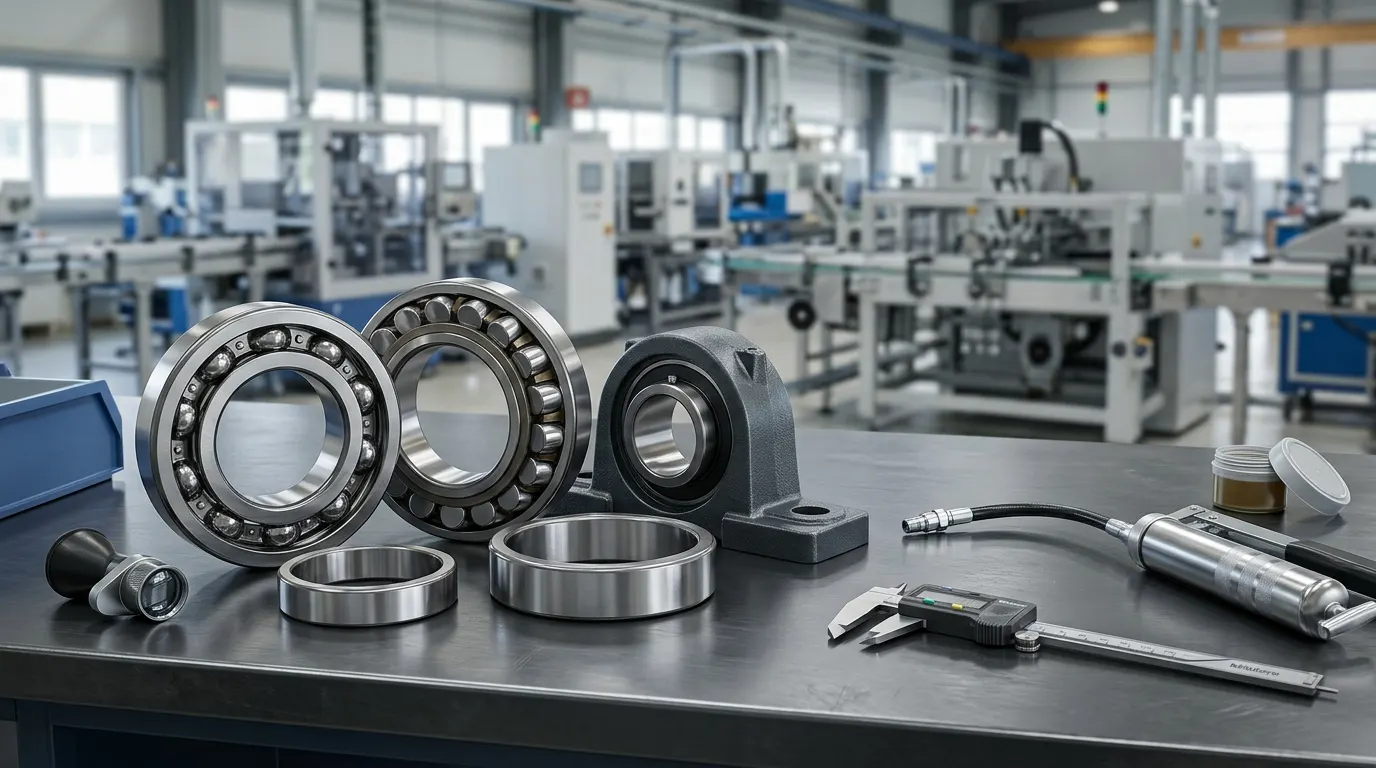
Most machine breakdowns don't start big. They start small — a slightly noisy bearing, a bit of extra heat nobody bothered to check, a housing that felt "a little loose" during last month's walk-through. Nine times out of ten, that overlooked part is a bearing. Getting into the habit of checking Ball Bearings regularly is one of the cheapest insurance policies a plant can have. It costs almost nothing compared to the alternative: a line stoppage, a rush order for spares, and a maintenance team scrambling on a weekend.
Here's the thing — a Ball Bearing rarely fails without warning. It usually complains first, through sound, heat, or vibration. This guide covers what a proper inspection routine looks like, why it's worth the ten minutes it takes, and how plants of any size can build the habit without adding extra work to an already packed schedule.
What Are Industrial Bearings?
At its core, a bearing does one job: it lets two surfaces move against each other with as little friction as possible. Simple concept, but it matters enormously in practice. Among the different designs out there, the Ball Bearing is probably the one you'll run into most — compact, efficient, and capable of handling decent loads at high speed without much fuss. If you look closely at how Balls and Bearings interact inside the housing, you'll notice the balls themselves usually show damage first when something's wrong, whether that's overload, dirt, or a lubrication problem.
Fact: More bearings fail from contamination than from plain old fatigue.
Why Is Bearing Inspection Important?
Skip Ball Bearing Maintenance long enough and something eventually gives. It's not a question of if, really — just when. A worn or contaminated bearing tends to cause a few predictable headaches:
- Vibration and noise creep up in machines that used to run quiet
- Operating temperature climbs past what's normal for that unit
- Shaft alignment drifts out, sometimes without anyone noticing right away
- In the worst case, the whole motor or pump gives out
None of this happens overnight, which is good news — there's usually a window to catch it. Discoloration, an odd pitch in the noise, a hotter housing than usual — these clues let a team plan a replacement on their own schedule instead of during an emergency shutdown.
Trivia: Rolling designs to cut friction go back centuries — early sketches are credited to Renaissance-era inventors tinkering with reduced-friction mechanisms.
Types of Bearings You Should Know
Not every bearing does the same job, and knowing your Ball Bearing Types makes inspection a lot less guesswork. A quick rundown:
- Deep groove bearings — the everyday workhorse for general radial loads
- Angular contact bearings — handle a mix of radial and axial loads
- Thrust bearings — built specifically for axial loads, often in vertical shafts
- Spherical roller bearings — forgiving of misalignment, good for heavy-duty shafts
- Cylindrical roller bearings — where you need serious radial load capacity
- Precision machine tool bearings — for high speed and tight tolerances
Once you know which type is sitting inside a given machine, you'll know what "normal wear" actually looks like for it — and what doesn't.
Features to Look For During Inspection
Checking Industrial Ball Bearings doesn't require fancy equipment, just attention. A few things worth a close look:
- How the raceway and rolling elements look — smooth, or pitted?
- Grease condition — contaminated, dried out, or just right?
- Any looseness or play in the housing that shouldn't be there
- Seals — intact, or showing signs of leakage?
- The sound when you rotate the shaft by hand
- Temperature versus what that machine normally runs at
Machines under constant heavy load deserve extra attention here. Fitting them with Heavy Duty Ball Bearings designed for that kind of punishment cuts down how often you'll need to step in.
Product Overview
A solid bearing lineup usually covers ball bearings, cylindrical roller bearings, tapered roller bearings, spherical roller bearings, thrust bearings, plummer block housings, and pillow blocks. Each one is built around a specific combination of load, speed, and heat tolerance — which is exactly why picking the right type for the job matters just as much as inspecting it afterward.
Genuine, properly tested components wear in a way you can predict. A cheaper, untested part can look fine right up until it isn't. Worth noting installation dates and batch numbers — if one batch starts failing early, that pattern is easier to spot when it's written down.
Benefits of Routine Bearing Inspection
Here are the benefits of routine bearing inspection:
- Machines simply last longer when someone's paying attention
- Fewer surprise breakdowns, fewer emergency repair bills
- Less friction loss means better energy efficiency, plant-wide
- Replacements get planned ahead instead of scrambled for
- Output quality stays consistent when equipment runs the way it should
Sticking with reliable Ball Bearings Suppliers pays off too — replacement parts actually match the tolerances they're supposed to. Over time, that shows up as fewer panic purchases and a spares inventory that reflects what actually gets used.
Did You Know: Even one degree of shaft misalignment can noticeably shorten a bearing's working life — alignment checks matter as much as the visual once-over.
Applications and Use Cases
Ball Bearing Applications show up almost everywhere you look in industry:
- Automotive parts — wheel hubs, transmissions, and more
- Farm equipment — tillers, harvesters, that sort of machinery
- Pumps and motors handling fluids day in, day out
- Cement, steel, and mining gear working under punishing loads
- Paper mills and sugar processing lines
- Home appliances and general factory equipment
General Comparison Table: General Bearing Characteristics
Understand the general bearing characteristics with a comparison table:
| Bearing Type | Load Handling | Typical Environment | Inspection Frequency |
|---|---|---|---|
| Deep Groove Ball Bearing | Light to moderate radial | General machinery | Low — routine checks |
| Angular Contact Bearing | Combined radial and axial | Motors, pumps | Moderate |
| Thrust Bearing | Mostly axial | Vertical shaft setups | Moderate |
| Spherical Roller Bearing | Heavy radial, tolerates misalignment | Heavy engineering, mining | High |
| Cylindrical Roller Bearing | High radial loads | Industrial gearboxes | High |
Expert Tips and Buying Guide
Here are the expert tips and buying guide for your reference:
- Pull apart a bearing ball bearing assembly and check for uneven wear before putting it back
- Run your eye over the bearing ball surfaces — pitting, flat spots, discoloration all matter
- Don't mix components from different manufacturers in one housing; it rarely ends well
- Store spares somewhere clean and dry until they're actually needed
- Stick with Ball Bearings Suppliers who can vouch for genuine, tested stock
- Keep a simple log — inspection dates, replacements, nothing fancy needed
- Get the grease amount right; too much causes almost as many problems as too little
- Teach the floor staff what an early warning sound or vibration actually feels like
- Set fixed inspection intervals rather than waiting for someone to complain
IBH
IBH, your reliable Nachi Bearing Distributor, Dealer & Supplier in India. IBH is associated with Nachi, a renowned Japanese brand, established its presence in the country almost 8 decades before. IBH established in 1973 the company has more than 80 years experience to ease the sourcing and bearing needs. With the availability of Nachi Technology India Pvt. Ltd. (NTID), who manufactures bearing solutions from their technologically sound plant in Neemrana, Rajasthan IBH is a dependable solution provider that deals with all Nachi pillow blocks, thrust ball bearings, cylindrical roller bearings, etc., equipped with a complete catalogue and all the technical backup available in the industry.
FAQs
1. How often should industrial bearings be inspected?
Ans: It depends on the load and environment, but most plants do a quick visual and sound check weekly, with a more thorough inspection monthly. Machines running under heavy, continuous load — think mining or cement equipment — deserve closer attention, sometimes daily, since problems there tend to escalate faster than in lighter-duty setups.
2. What's the earliest warning sign of a failing ball bearing?
Ans: Usually it's sound before anything else — a faint grinding or clicking that wasn't there before. Heat comes next, followed by vibration you can feel through the housing. None of these mean immediate failure, but they're your cue to look closer. Waiting for visible damage or a full stoppage means you've already missed the easier fix.
3. Can over-greasing a bearing cause damage?
Ans: Yes, surprisingly often. Too much grease builds internal pressure and raises operating temperature, which stresses seals and speeds up wear — almost the same outcome as running it dry. The right amount depends on bearing size and speed, so it's worth checking manufacturer guidance rather than assuming more lubrication is always safer.
4. How do I know which bearing type my machine actually needs?
Ans: Start with the load direction — radial, axial, or a mix — plus the speed and any misalignment risk. Deep groove bearings suit general radial loads, thrust bearings handle axial loads, and spherical rollers forgive misalignment. When in doubt, matching the original manufacturer's specification is safer than guessing based on price or availability.
5. Does buying from a trusted supplier actually matter for bearing life?
Ans: It matters more than most people expect. Genuine, properly tested bearings wear predictably, while untested or mismatched parts can look fine for weeks and then fail without warning. A reliable supplier also means consistent tolerances batch to batch, which keeps your maintenance schedule predictable instead of full of surprises.
6. What's the biggest mistake plants make with bearing maintenance?
Ans: Waiting for a complaint instead of scheduling checks. Most failures give warning signs — noise, heat, minor vibration — well before anything breaks down completely. Plants that treat inspection as routine, not reactive, catch these early and plan replacements calmly, instead of dealing with unplanned downtime and rushed emergency repairs later.
Conclusion
The plants that rarely deal with breakdowns aren't lucky — they inspect consistently. Know your bearing types, catch the early signs, stick to a routine, and downtime stops being a mystery.
Need reliable bearings for your next maintenance round? Contact to our team at IBH and we'll help you find the right fit.